
The effect of cognitive-behavioral study on beginning the continuity of breastfeeding in twins: A Randomized Controlled Clinical Trial
Khadijeh Hekmat1, Samaneh Orak2*, Parvaneh Mousavi3, Mohammad Hossein Haghayeghi4, Parviz Askari 5
1 Department of Midwifery, Faculty of Nursing and Midwifery, Ahwaz Jundishapur University of Medical Sciences, Ahwaz, Iran, 2 Master Student in Midwifery Counseling, Faculty of Nursing and Midwifery, Ahwaz Jundishapur University of Medical Sciences, Ahwaz, Iran. 3 Department of Midwifery, Faculty of Nursing and Midwifery, Ahwaz Jundishapur University of Medical Sciences, Ahwaz, Iran. 4 Department of Biostatistics, School of Health, Ahwaz Jundishapur University of Medical Sciences, Ahwaz, Iran. 5 Department of Psychology, Ahwaz branch, Islamic Azad University, Ahwaz, Iran.
ABSTRACT
Background and aims: The known benefits of breastfeeding have led to the creation of health policies on promoting feeding with breast milk. The present study aimed to evaluate the effect of cognitive-behavioral therapy consulting on the beginning and continuity of breastfeeding in twins. Materials and Methods: In this clinical trial study, 40 pregnant women were selected through purposeful sampling and randomly divided into two groups of the test (20) and control (20). The test group participated in eight cognitive-behavioral therapy sessions every week. The control group received only routine care. Data were collected and analyzed using SPSS software (version 25). Results: The average time period of breastfeeding in each time (min) showed significant difference in the intervention and control groups (P <0.001). The average age of infant at the time of beginning the feeding by artificial milk in intervention and control groups was (18 ± 45.33) and (20 ± 1.9) in the firstborn and (18 ± 42.5) and (20 ± 1.9) in the second-born, respectively, which was significantly different (P <0.001).) Conclusion: Based on the results of this study, it seems that cognitive-behavioral therapy is effective in the beginning and continuity of breastfeeding in twins.
Keywords: breast milk,cognitive-behavioral therapy, twins.
Introduction
Breastfeeding prevents more than 7 million child mortalities around the world. The likelihood of mortality caused by gastrointestinal infections and diarrhea among infants fed by mother milk is less than those who are fed with milk powder [1]. During the last two decades, the prevalence of twin pregnancy has significantly increased in developed countries [2, 3]. Breastfeeding of mothers especially in twin pregnancy and their growth procedure is especially important as these infants are at higher risk for weight loss and growth retardation in early infancy [4] and are very sensitive to some infections [5]. They need breast milk more than other infants [6]. Additionally, breastfeeding of the twins needs knowledge and skill [7]. However, twin infants normally are not fed by breast milk at the required level [8].
Although many twins are breast-fed at the beginning, only a few of them are fed by breast milk for three or four months [5]. Generally, the studies have shown that the amount of breastfeeding in twins is less than the general population). One of the most important reasons for the lack of success in breastfeeding of twin infants is mothers’ concern that the infants do not drink enough milk [9]. It is claimed in the studies that milk production is based on the supply and demand rule, so mothers of several children can produce enough milk for each of their infants [10]. According to WHO, 99 percent of mothers in non-developed countries have physiological ability to breastfeed but in many cases, lack of enough awareness and wrong beliefs cause a disturbance in breastfeeding and sometimes breast milk cutting and turning to the other ways on feeding such as using milk powder or pasteurized milk [11, 12]. Unfortunately, studies show that in Iran, 49.4 percent of mothers continue the exclusive breastfeeding up to the infant is 4 months old and under 23 percent continue until the infant is 6 months old [13]. Shortening the time of breastfeeding especially in non-developed countries is a serious problem, as annually, more than one million infants die due to the lack of breastfeeding [14]. The decision of women for breastfeeding has many benefits including the health of the infant, the health of breastfeeding mothers and also socio-economic advantages for the country [15]. Guys et al. stated that training before the delivery is one of the most important potential interventions for increasing the rate of beginning the breastfeeding and the time of breastfeeding [16, 17]. Psychologic states of women are important for their breastfeeding procedure [18]. It seems that mothers’ mental condition or tension has an impact on the amount of breastfeeding [19]. Breastfeeding behavior is affected by mothers’ several physiological and cognitive factors [20]. In addition, it should be noted that changing the physiological conditions is difficult and sometimes impossible; so, in order to improve the mentioned behavior, the interventions should be found on the effective cognitive and motivational factors [21, 22]. In cognitive-behavioral therapy, the treatment procedure is designed to identify the negative thoughts or cognitions, and evaluate the links between cognition, emotion, behavior, and evidence against the spontaneous thoughts to eventually substitute the realistic change with distorted cognitions.[23] Cognitive-behavioral consulting can increase the time of exclusive feeding with breast milk up to 2 folds in a single baby in 6 months after the delivery [24]. The combination of the cognitive-behavioral consulting methods in normal consultation for the exclusive feeding with breast milk is culturally advantageous, acceptable, and performable [24]. The result of the research showed that the lack of required facilities and training-consulting interventions causes a lack of unreliability in the adequacy and success in exclusive breastfeeding [25]. In a recent systematic review, after studying 198506 clinical trial studies on pregnant women about the effect of different breastfeeding training methods, the authors concluded that the existing studies are inadequate to claim a certain idea about the best method of breastfeeding training and there is a need for clinical trial studies to evaluate the effects of breastfeeding training during the pregnancy [26]. Since the most benefits of breastfeeding have been proved about single babies and it is less studied on twins, mothers need to be consulted about breastfeeding, when they are informed on their twin pregnancy [27]. Successful management in feeding twin infants needs early training of the pregnancy period nourishment and consulting during breastfeeding [28]. Regarding the efficiency of the cognitive-behavioral therapy in clinical interventions and regarding the lack of studies on the efficiency of the cognitive-behavioral therapy on twin breastfeeding in Iran, the present study aimed at investigating the efficiency of the cognitive-behavioral therapy on the beginning and continuity of twin breastfeeding.
Materials and Methods:
The present study was a clinical trial study conducted after taking the permission of the research deputy and receiving the ethic code (IRAJUMS.REC.1397.287), in health centers and breastfeeding clinics of Ize City, Khuzestan Province, Iran. Sampling was done randomly in accordance with the characteristics of the units under study and the conditions for entering the study. They were randomly assigned to the intervention and control groups. The sample size was selected according to the opinion of the Professor of Statistics and according to Masoumi et al. [29] with 95% confidence level and 90% power, including 15% for loss, 40 were selected and randomly assigned into the control group (20 subjects) and the experimental group (20 subjects).
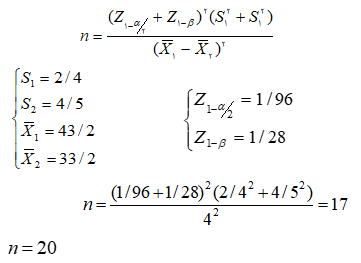
Mothers having twin pregnancy referred to the health centers in Ize were identified and after a phone call and ensuring of having all the criteria to include in the study, they were informed of the study aims and optional participation in the study and assuring of the confidentiality of the data and possibility of leaving the study when the participant decided, they were invited to the study. The inclusion criteria were the willingness to participate, written consent, twin pregnancy, being the resident of Ize, ability to read and write, the pregnancy age of 28-30 weeks, confirming the pregnancy age by first 3 months ultrasound or accurate LMP. The exclusion criteria were the stillbirth, infant death, and absolute and relative forbidding of mothering such as HIV positive people.
After filling the demographic data form, 40 people of the subjects having the inclusion criteria were included in the study and were randomly divided into control and test groups each with 20 subjects, by random four blocks (ABAB) with allocation 1:1…. The therapy was performed on the intervention group in two and three-people groups by the cognitive-behavioral methods at the 29th week of pregnancy and then every week up to 34 weeks and also, after delivery from the 14-15 day of infant’s age to one month old in one-hour session for eight weeks by the researcher (Master’s degree in midwifery consulting). The sessions were performed in breastfeeding clinics, considering the morality of the subjects. The content of the sessions was determined based on the scientific instruction of the cognitive therapy group by Michel Ferry as presented in Table 1. A phone number was given to the subjects and they were asked to contact the researcher if they had any problem and question during the day and night. The control group received routine care during this period. The tool used in this study included the questionnaire and the checklist. After delivery, the continuity of twin breastfeeding questionnaires and the checklist of the breastfeeding function were given to both control and intervention groups, separately. The weighting of the infants was done at birth, 14-15th day, 1, 2, 3 and 4th month in both groups. In this study, the data collecting method was observing and reporting, which was done by the researcher. The tool used for data collecting consisted of the continuity of the twin breastfeeding questionnaire, the checklist of the breastfeeding function, and weighing the infants using a Seca scale. The questionnaire was self-made. The content validity method was used to confirm the validity of scientific questionnaires. By studying the update and available scientific resources such as books, journals, and scientific articles and regarding the aims of the research and identifying the interferer variables, the data form was designed and then its questions were checked by 10 university professors and were corrected by using their comments. The reliability of the questionnaire was evaluated using the re-test, and the questionnaire form was filled for 20 eligible subjects and then the correlation between answers was calculated. The Cronbach Alpha correlation for the reliability was considered as greater than 70%. The used checklist of breastfeeding function was previously studied by Masoumi et al. [30].
Its validity has been determined using the Content Validation Method to determine the reliability of the questionnaire on the determination of alpha Cronbach on 20 people, this value was α = 0/92.
The reliability of the checklist was α = 0.81. The reliability of the scale tools was checked using a control weight (100 g before the primary weighting). After collecting the information, the data were analyzed using SPSS software version 25. In this research, the independent t-test was used to compare the quantitative variables in two groups and if the distribution was not normal in case of the qualitative ranked variable, Mann-Whitney non-parametric test and for the qualitative nominal variables the chi-square test was used. The significance level was 0.05.
The summary of the cognitive-behavioral therapy at the beginning and continuity of the breastfeeding are as follows:
First session: Greetings, introduction, stating the rules and regulations of the sessions- thinking and emotion, A-B-C training: Reposing, assigning homework for the next session.
Second session: Evaluating the previous session, explanation of the cognitive-behavioral method and the importance of breast milk and mother’s diet during the pregnancy and breastfeeding, assigning homework for the next session.
Third session: Evaluating the previous session, incompatible schema and its relation with inefficient hypothesizes and negative spontaneous thoughts, training to identify the inefficient schema using a down arrow. Evaluating the adequacy of breast milk, real and false inadequacy of breast milk, denying to drink the breast milk, familiarity with the important points in twin care. Training: Reposing, assigning homework for the next session.
Fourth session: Evaluating the assigned homework in the previous session, the example of the Lake Giant, objective analysis, standard analysis, evaluating the impact of breastfeeding, assigning homework for the next session.
Fifth session: Analysis of efficiency, analysis of coordination, discussing the effective factors on twin breastfeeding (the correct way of breastfeeding, the correct positions of breastfeeding (practical show), Training: Reposing, assigning homework for the next session.
Sixth session: Evaluating the assigned homework in the previous session, making the hierarchy, opposition, training the methods of continuity of breastfeeding, prevention and solving the common breast problems, Training: reposing, assigning homework for the next session.
Seventh session: Evaluating the assigned homework in the previous session, self-punishing, self-rewarding, milk preservation and milk squeezing techniques, common problems in infants feeding, breastfeeding in special situations, Training: Reposing, assigning homework for the next session.
Eighth session: Total evaluation of the program, clarifying the ambiguities in training and designing the training intervention: reposing.
Results:
In this study, 40 twin-pregnant women were investigated from the pregnancy age of 29 weeks up to four months after delivery. Table 1 shows the distribution of the demographic and midwifery variables. In this study, the average age of mothers in intervention and control groups was 29 ± 5.88 and 28.5 ± 3.64, respectively. In addition, this Table shows that the highest frequency in women's occupations belongs to housewives.
According to Table 1: 94.7 percent of the mothers in the control group stated the inadequacy of breastmilk as a reason for starting the artificial milk, which was significantly different from the test group (P = 0.001). According to the Mann-Whitney test, the early beginning of breastfeeding in the intervention group was more than the control group (P = 0.001). The results of the study showed that the breastfeeding times per day and breastfeeding times per night in two statistical groups were significantly different (P = 0.001).
The average period of time of breastfeeding in two intervention and control groups in the firstborn was 20.75 ± 6.34 and 11.6 ± 6.35, respectively and it was in two intervention and control groups in the second-born 22.25 ± 6.97 and 13.4 ± 7.42, respectively. The average period of time of breastfeeding showed a significant change compared to the control group (P <0.05).
|
Table 1. Distribution of the demographic and midwifery variables in the test and control groups (mean ± SE) or number (percentage) |
|||
|
Variables |
Cognitive-behavioral therapy test group |
Control group |
Significance |
|
Mother’s age |
29.5 ± 5.88 |
28.5 ± 3.64 |
0.522 |
|
Pregnancy number |
2.25 ± 1.51 |
1.9 ± 1.2 |
0.425 |
|
Pregnancy age (week) |
35.54 ± 1.73 |
35.71 ± 1.56 |
0.745 |
|
Care during the pregnancy period |
4.62 ± 14.35 |
5.47 ± 16.15 |
0.269 |
|
History of breastfeeding |
18.23 ± 7.69 |
15 ± 8.51 |
0.351 |
|
Mother’s occupation |
|
||
|
Housewife |
17 (85) |
19 (95) |
0.292 |
|
Working |
3 (15) |
1(5) |
|
|
Mother’s education |
|
||
|
Under high school diploma |
6 (30) |
4 (20) |
0.765 |
|
High school diploma |
8(40) |
9 (45) |
|
|
Academic education |
6 (30) |
7 (35) |
|
|
Training in the hospital |
|
||
|
Yes |
13 (65) |
12 (60) |
0.744 |
|
No |
7 (35) |
8 (40) |
|
|
Infant’s disease |
|
||
|
Yes |
7 (35) |
5 (25) |
0.376 |
|
No |
13 (65) |
15 (75) |
|
|
Consuming liquids other than milk |
|
||
|
Yes |
0 |
9(45) |
0.001 |
|
No |
20(100) |
11(55) |
|
|
The reason for starting the artificial milk |
|
||
|
Inadequacy of the breast milk |
0 |
18(94.7) |
0.001 |
|
Other reasons |
18 (100) |
1 (5.3) |
|
|
Table 2. Evaluating the continuity in breastfeeding |
|||
|
Variables |
Cognitive-behavioral therapy test group |
Control group |
Significance |
|
The time (min) of starting the breast milk in the firstborn |
11 ± 30 |
44 ± 34 |
0.001 |
|
The time (min) of starting the breast milk in the second-born |
36 ± 18 |
52.6 ± 42.7 |
0.001 |
|
Breastfeeding times per day in the first born |
3.01 ± 9.5 |
2.6 ± 4 |
0.001 |
|
Breastfeeding times per day in the second-born |
3.17 ± 9.25 |
2.6 ± 4 |
0.001 |
|
Breastfeeding times per night in the firstborn |
1.75 ± 4.35 |
1.4 ± 2.37 |
0.001 |
|
Breastfeeding times per night in the second-born |
1.77 ±4.25 |
1.4. ± 2.37 |
0.002 |
|
Period of time of breastfeeding (min) in the firstborn |
20.75 ± 6.34 |
11. 6 ± 6.35 |
0.001 |
|
Period of time of breastfeeding (min) in the second-born |
25.22 ± 1.59 |
5.85 ± 1.75 |
0.001 |
Discussion:
Since the demographic variables could affect the present study, firstly, the studied unites in the intervention and control groups were analyzed in terms of these effective variables by statistical independent t-test.
In a study on the exclusive feeding in Brazil, the mother’s education level was reported as an effective factor in suitable breastfeeding of the infant. In this study, mothers with a lower level of education were more likely to stop breastfeeding [31]. This result is in agreement with the findings of Mojalli et al. [32] 35but they are different from the findings of our study because of the difference in the type of consulting and the methodology. In the study of Forouzani (2012) on the effect of breastfeeding training on the breastfeeding pattern and the health of four-month-old infants in Iran, the mother’s level of education was not significantly related [33]. The studies by Masoumi et al. [29], Dehkordi et al. [34], Sikander et al. [24] and Azhari et al. [35] confirmed this result that all of the mentioned studies are in agreement with the current study.
The results of the current study showed that cognitive-behavioral therapy could increase the beginning and continuity of the breastfeeding in twins, which was consistent with the results of the study by Sikandr et al. on the effect of cognitive-behavioral therapy exclusive breastfeeding [24]. However, our results are not in agreement with the study of Mikami et al. (2017) on the effect of breastfeeding consulting on the amount of long-term breastfeeding in twin mothers [36]. This may be because the mentioned study is different in the type of consulting the number of sessions with our study. The intervention group received only three sessions during the pregnancy.
Moreover, the results of a study conducted by Owais entitled “the effect of consulting on the exclusive breastfeeding” showed that the beginning of breastfeeding and the amount of exclusive feeding with breast milk in the intervention group was significant, which was consistent with the results of our study [37]. In this way, Parsa et al. also found out that the beliefs of the mothers and their spouses are effective in promoting and continuity of the breastfeeding [38]. One of the findings of the study of Pabarga et al. is emphasizing on the importance of the continuity of cares on exclusive feeding with breast milk, which is not consistent with the number of received cares in our study but it is in agreement with the health consulting to keep breastfeeding and especially with the exclusive feeding with breast milk [39].
Sikandr in his study showed that in comparison to the routine methods, the cognitive-behavioral consulting increased the time period of exclusive feeding with breast milk 25), which is consistent with the results of this study. Arzani et al. in their study on 55 mothers could increase the weight of low-weight infants after performing 5 training sessions and could improve the breastfeeding performance in mothers of these infants [35].
In a variety of studies, the impact of training on times and time periods of breastfeeding has been shown, but the condition and the methodology of none of them are similar to the current study to compare the results.
Conclusion
Cognitive-behavioral therapy can be effective as a therapeutic approach to improve the onset and continuation of breastfeeding.
Acknowledgments
This paper is a part of a student thesis with the ethic code of IRAJUMS.REC.1397.287. The researcher and collogues would like to thank the research deputy of Ahwaz Jundishapur University of Medical Sciences. Also, the participation of all pregnant women in this study is greatly appreciated.
Trial Registration Number: IRCT20180909040976N
References
- Amini R, Mohamadi N , Omidi A ,khodavisi M , Borzo R, Moradi F. Causes of breastfeeding in children under one year of age in patients referred to health centers. Scientific Journal of Hamadan Nursing & Midwifery Faculty.2013; 20(2):58-64 (Persian).
- Blondel B, Kogan MD, Alexander GR, Dattani N, Kramer MS, Macfarlane A, Wen SW. The impact of the increasing number of multiple births on the rates of preterm birth and low birthweight: an international study. American journal of public health. 2002 Aug;92(8):1323-30.
- Kinzler WL, Ananth CV, Vintzileos AM. Medical and Economic effects of twin gestations. J Soc Gynecol Invvestig 2000; 7: 321-327.
- Whitford H. M, Wallis S. K, Dowswell T, West H. M & Renfrew, M. J. Breastfeeding education and support for women with twins or higher order multiples. The Cochrane Library.2017;2
- Kielbratowska B, Cwiek D, Preis K, Malinowski W, Hofman A. Breastfeeding of twins. Archives of Perinatal Medicine, 2010; 16: 201-205
- Kerkhoff Gromada k, MSN, RN, IBCLC, Amy K. Spangler, MN, RN, IBCLC. Breastfeeding Twins and Higherorder Multiples. Journal of Obstetric, Gynecologic, & Neonatal Nursing.1998;27(4): 441–449
- Gromada KK, Spangler AK. Breastfeeding twins and higher‐order multiples. Journal of Obstetric, Gynecologic, & Neonatal Nursing. 1998;27
- http://wales.gov.uk/docs/
- Cinar ND, Alvur TM, Kose D, Nemut T Breastfeeding twins. J Health Popul Nutr, 2013; 31: 504-509
- Cinar N, Kose D, Dogu O Çoğul bebeklerin anne sütü ile beslenmesi Breastfeeding in multiple babies. Sakarya Tıp Dergisi Sakarya Med J, 2012; 2: 115-121.
- Bahry N, Baghery S, Erfany M, Rahmani R, Tolideei HR. The Comparison of WorkshopTraining and Booklet-Offering on Knowledge, Health Beliefs and Behavior of Breastfeeding after Delivery. Iran j Obstet, Gynecol Infertil, 2013;15(32):14-22. [Persian]
- Saba MS, Bazm Amoun H, Razavi Z. [Comparison of face-to-face education with other methods to pregnant mothers in increase exclusive breastfeeding] [Article in Persian]. J Hamadan Univ Med Sci, 2005;37(12):42-7.
- Panahi F., Simber M., lotfi R., Rahimzadeh M.The Effect of parent s training on knowledge,attitude and practice in exclusive breastfeeding to four month. IJOGI.July 2017; 20 (5). 48-57 (Persian).
- Gafari Asl M, Fadakar Sogheh R, Ghavi A, Ahmad Shear bafi M. Related factors to continued breastfeeding in infants. journal of HOLISTIC NURSING AND MIDWIFER. 2013; 24(72).1-8 (Persian).
- American Academy of Pediatrics, American College of Obstetrics and Gynecology. Breastfeeding Handbook for Physicians. Qom:Andisheh mandegar;2019
- I.R.I Reastfeeding Prmotion Society. Breastfeeding Updates for the pediatrician. Tehran: I.R.I Breastfeeding Prmotion Society;2013
- Morrow,Adrythe L.Caroline J.Chantry. Breastfeeding Updates for the pediatrician.Pediatric Clinics of North America; 2013.
- Bastani F, Rahmatnejad L, Jahdi F, Haghani H. Breastfeeding self efficacy and perceived stress in primiparous mothers. Iran Journal of Nursing. 2008;21(54):9-24.
- Lau C, Hurst N, Bums P, Schanler RJ . Interaction of stress and lactation differs between mothers of premature singletons and multiples. Adv Exp Med Biol. 2004; 554:313-316.
- Blyth RJ, Creedy DK, Dennis C-L, Moyle W, Pratt J, De Vries SM, et al. Breastfeeding duration in an Australian population: the influence of modifiable antenatal factors. Journal of Human Lactation. 2004; 20(1):30-8.
- Otsuka K, Dennis C-L, Tatsuoka H, Jimba M. The relationship between breastfeeding self-efficacy and perceived insufficient milk among Japanese mothers. Journal of obstetric, gynecologic & neonatal nursing. 2008;37(5):546-55.
- O’Brien M, Buikstra E, Hegney D. The influence of psychological factors on breastfeeding duration. Journal of advanced nursing. 2008;63(4):397-408.
- Aghaei A, Raeisi R, Atashpour S. The relationship between optimism and pessimism with mental health in adults in Isfahan. 2007.
- Sikandr S, Maselko J, Zafar S, Haq Z, Ahmad I, Ahmad M, et al. Cognitive-behavioral counseling for exclusive breastfeeding in rural pediatrics: a cluster RCT. Pediatrics. 2015; 135(2):e424-e31.
- Ertem IO, Votto N, Leventhal JM. The timing and predictors of the early termination of breastfeeding. Pediatrics. 2001; 107(3):543-8.
- Rahman A,Hag Z, Sikander S, Ahmad I, Ahmad M .Using cognitivebehavioural techniques to improve exclusive breastfeeding in a low-literacy disadvantaged population. Ltd Maternal and child nutrition.2012; 8:57-71.
- Biancuzzo M. Breastfeeding the newborn: Clinical strategies for nurses: Mosby Incorporated; 2003.
- behdasht.gov.ir i
- Masoumi SZ, Khalili A, Shayan A, Yazdi-Ravandi S, Ahmadi S, Ghodratollah R. The effect of exclusive breastfeeding counseling on knowledge and attitudes of mothers with premature infants. Pajouhan Scientific Journal. 2016;15(1):52-9.
- Masoumi S.Z. Ahmadi Sh, Parsa P, Roshanaei Gh, Basiri B. Effects of counseling on adherence to exclusive
breastfeeding in mothers of hospitalized late preterm infants in Fatemieh hospital, Hamadan, Iran, 2014. Sci J Hamadan Nurs Midwifery Fac. 2015;23(3):1-8.(Persian). - do Nascimento MB, Reis MA, Franco SC, Issler H, Ferraro AA, Grisi SJ. Exclusive breastfeeding in southern Brazil: prevalence and associated factors. Breastfeeding medicine. 2010 Apr 1;5(2):79-85.
- Mojalli M BMM, Shamshiri M. Effect of educational environment and related factors on mothers lactation performance Ofogh Danesh. 2010;16(1).
- Moosavi Sahib Alzamani, Azizi M, Abdolkhani S, Farahini N, Ahmadi A. The Effect of Cognitive Behavioural Psycho-Education on Improvement of Mothers' Mental Health and Infant Gaining Weight. Applied Psychological Research Quarterly. 2014; 5(1),137-154.
- Dehkordi Z, Raei M, Shirazi M, Dehkordi S, Mirmohammadali M. Effect of telephone counseling on continuity and duration of breastfeeding among primiparus women. Hayat. 2012;18(2).
- Arzani A, Kermanshahi S, Zahad Pasha Y. The effect of educational intervention on continuous breast feeding in low birth weight infants. J Qazvin Univ Med Sci 2008;12(2):47-53. (Persian).
- Mikami FCF, de Lourdes Brizot M, Tase TH, Saccuman E, Francisco RPV, Zugaib M. Effect of prenatal counseling on breastfeeding rates in mothers of twins. Journal of Obstetric, Gynecologic & Neonatal Nursing. 2017; 46(2):229-37.
- Muhammad Owais A, Sughra U, Kalsoom U, Imran M, Hadi U. Effect of antenatal counselling on exclusive breastfeeding. J Ayub Med Coll. Abbottabad. 2012; 24(2):116–9 .
- Parsa P, Boojar A, Roshanai G, Bakht R. The effect breastfeeding counseling on Self- efficacy and continuation breastfeeding among primiparous mothers. Sci J Hamadan Nurs Midwifery Fac. 2016; 24(2):98-102.
- Pabarga F, Farivar K, Kordi M, Khadivzadeh T, Mazloom S. [The effect of postpartum home visit on infant’s feeding pattern]. J Nurs Midwif Mashhad.2003;5(16):24-31.
Contact SPER Publications
SPER Publications and
Solutions Pvt. Ltd.
HD - 236,
Near The Shri Ram Millenium School,
Sector 135,
Noida-Greater Noida Expressway,
Noida-201301 [Delhi-NCR] India