Physical activity during pregnancy: impacts on maternal health and childbirth outcomes in Kyrgyzstan
Abstract
Pregnancy is a crucial time when women become motivated to participate in healthier lifestyles for the betterment of their growing child as well as for their own well-being. Frequent physical exercise during pregnancy helps lower the risk of prenatal weight gain, preeclampsia, gestational diabetes, and hypertension and enhances delivery outcomes. With a focus on the Kyrgyz Republic, where socioeconomic issues affect mother health, this study investigates how physical activity could improve mother and newborn outcomes. Using research databases including PubMed, Scopus, and Medline, a thorough literature search was undertaken under keywords including "Pregnancy," "Physical Activity," "Maternal Health," "Kyrgyzstan," "Prenatal Exercise," and "Aqua Aerobics." The Ministry of Health, Kyrgyzstan, and the National Statistical Committee of the Kyrgyz Republic provided national data on maternal health outcomes in Kyrgyzstan. In Kyrgyzstan, maternal health issues include a constant maternal mortality rate, significant anemia (over 50%), late toxicosis (13%), and postpartum problems including bleeding and complications during labor. Inadequate physical preparation for childbirth contributes in some measure to these problems. Structured physical activity programs—including yoga, Pilates, and aqua aerobics—show global evidence that they increase physical endurance, lower stress, and improve labor outcomes. In Kyrgyzstan, including organized prenatal exercise programs in maternal healthcare systems will help to close important disparities in mother health. Better access to physical activity interventions could greatly improve physical, psychological, and obstetric outcomes, hence lowering pregnancy-related problems and supporting better pregnancies.
Keywords: Pregnancy, Physical activity, Maternal health, Kyrgyzstan, Prenatal exercise, Aqua aerobics
Introduction
Physical exercise is an essential component of general health and well-being, aiding in the prevention and management of various diseases. Consistent maternal activity during gestation has demonstrated efficacy in mitigating pregnancy-related complications, including lowering the incidence of prenatal and postnatal anxiety and depression [1]. Moreover, prenatal exercise is both safe for the mother and advantageous for fetal development. Recent research indicates that maternal exercise during pregnancy correlates with less fetal obesity, a lower risk of preterm labor, and enhanced neurodevelopmental outcomes in offspring. The advantages stem mostly from the favorable impact of maternal activity on the intrauterine environment, enhancing blood circulation, oxygen supply, and nutrient transfer to the developing fetus [2].
There are also other reasons why physical activity should be incorporated during pregnancy apart from the management of diseases such as gestational diabetes, hypertension, and preeclampsia. Exercising helps in controlling gestational weight gain, enhances the cardiovascular system of the mother, and makes the body ready for delivery thus resulting in shorter and easier deliveries. In addition, maternal exercise has been found to have positive effects on the spine and the pelvic floor muscles which are very important during pregnancy and delivery. Mothers who engage in physical activities during pregnancy are less likely to experience certain labor complications and the recovery time taken after childbirth is also less thus enhancing the health status of the mother and the newborn child in the long run [3]. The significance of these results is particularly relevant in the Kyrgyz Republic where the issue of maternal health is still important. This is because, in this resource-limited setting, socio-economic barriers, poor access to good health care, and lack of adequate antenatal education are the major factors that affect maternal and fetal health. Despite the increasing awareness of the advantages of exercising during pregnancy, it is still common that women do not know about them or cannot afford to exercise regularly [4]. The analysis of the Kyrgyz Republic shows that the maternal mortality rate is still high and anemia, late toxicosis, postpartum hemorrhage, and labor complications are prevalent. These challenges reflect on prenatal management particularly on the aspect of counseling on the importance of exercise during pregnancy.
This study aims to investigate the beneficial impact of physical exercise on improving maternal health outcomes in Kyrgyzstan. This research intends to enhance evidence-based maternal healthcare policies in the region by emphasizing the advantages of structured prenatal exercise programs. Promoting physical exercise during pregnancy may reduce the incidence of pregnancy-related complications and improve outcomes for both mothers and fetuses in the Kyrgyz Republic. This research aims to offer significant insights to guide the creation of successful healthcare interventions that are accessible and culturally suitable for pregnant women in Kyrgyzstan.
Materials and Methods
This retrospective observational study investigates the influence of physical activity during pregnancy on maternal health outcomes, specifically in the Kyrgyz Republic. The research combines an evaluation of international publications with an investigation of national maternal health data to identify gaps and prospects in prenatal care practices within the region of Kyrgyzstan.
Data sources and search strategy
Literature review
The search for the studies was conducted systematically and comprised the databases, for example, PubMed, Scopus, and Medline for the articles published in the time from 2017 to 2023. The following keywords and their combinations were used: “Pregnancy,” “Physical Activity,” “Maternal Health,” “Prenatal Exercise,” “Kyrgyzstan,” and “Aqua Aerobics.” The search results were narrowed down with the help of Boolean operators. The titles, abstracts, and full texts of the articles that were retrieved were evaluated for their relevance to the study.
National data
The maternal and child health data and the associated demographic information were procured from the National Statistical Committee of the Kyrgyz Republic and the Ministry of Health of Kyrgyzstan [5].
Inclusion and exclusion criteria
The following inclusion criteria were used in which studies had to focus on physical activity in pregnancy, quantify or qualify maternal health outcomes, and describe structured exercise interventions. Also, the studies selected were relevant to maternal health challenges in LMICs or socio-economically disadvantaged populations. The articles were excluded if the language of the article was not English or Russian article and if the article had no empirical data or if the article focused on the theoretical or non-clinical framework.
Ethical consideration
The study followed the ethical guidelines laid out in the Declaration of Helsinki for Medical Research [6]. Ethical approval was waived because the study used publically available data from literature and national health statistics and had no direct interaction with human subjects. The retrospective characteristics of the study provided that ethical criteria for confidentiality and data privacy were followed. All data used in this study were anonymized and adhered to national and international ethical norms for secondary data use in observational studies.
Results and Discussion
Based on data obtained from the National Statistical Committee of the Kyrgyz Republic and the Ministry of Health of Kyrgyzstan through the published literature available in Web of Science, PubMed, Google Scholar, and others, many studies published from 2017 to 2023 were analyzed. The results show that in European countries and the United States of America, pregnant women participating in physical training programs experience less pain during childbirth. This is because they were prepared in advance: they knew the right poses to reduce pain during contractions and mastered breathing exercises. As a result, childbirth and recovery took place without serious complications and psychological trauma.
With sustained mother death rates over the past five years, mother health issues remain an important challenge in the Kyrgyz Republic. This alarming trend is intimately related to declining socioeconomic situations and inadequate physical preparation for childbirth. These results are much influenced by the interaction of restricted healthcare access, nutritional deficits, and poor prenatal knowledge.
In various regions of Kyrgyzstan, a significant number of pregnant women deal with health issues that compromise the welfare of either mother or fetus (Figure 1). Unbelievably, one in three women receive a gastrointestinal tract diagnosis; this disorder might damage general health and food absorption during pregnancy. Anemia, a serious condition distinguished by iron shortage that causes tiredness, decreased immunity, and higher risk during delivery, affects more than half of all pregnant women. Furthermore, 13% of pregnant women get late toxicosis (preeclampsia or similar diseases), a possibly fatal illness linked with high blood pressure and organ malfunction. Moreover, 2% of women suffer from genitourinary system illnesses, which aggravates pregnancy and birthing problems.
|
|
|
Figure 1. Number of maternal deaths recorded in various regions of Osh from 2019 to 2023. The figure illustrates annual trends and regional variations in maternal mortality, highlighting potential disparities in maternal healthcare access and outcomes. |
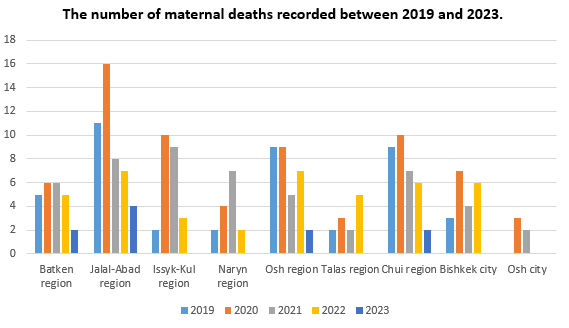
Furthermore common are postpartum difficulties; many women suffer from labor problems and too heavy bleeding. Often resulting from inadequate prenatal care, especially in terms of learning fundamental physical and breathing activities, these issues reflect inadequacies in preparation for birthing [7]. Strengthening the musculoskeletal system, improving pelvic flexibility, and encouraging efficient labor depends on proper physical preparation involving organized exercise and breathing techniques. Many women's capacity to participate in these healthy activities is constrained, though, by restricted access to prenatal exercise programs and expert advice [8].
Based on the data on mother health in Kyrgyzstan in recent years (Figure 2), the depiction of the development and challenges in managing diseases that affect women in labor and pregnancy can be considered ambiguous. Reviewing the possible improvements in the provision of prenatal care, dietary therapies, and general measures that have been taken to reduce this very common condition anemia was seen to have decreased from 82,597 in 2019 to 69,857 in 2022. On the other hand, diseases of the cardiovascular system showed an alarming trend and increased significantly from 640,000 in 2021 to 730,000 in 2022. This trend demonstrates the increasing trend of cardiovascular health problems during pregnancy thus highlighting the need for targeted preventive and management strategies.
There were between 12,000 and 13,000 cases per year and late toxicosis did not change much during the analysis period which may suggest that there are effective management strategies in place but also that there is a need for continued efforts in the management of this disease. This is because Venous complications for instance showed a steady increasing trend from 4,310 in 2019 to 5,769 in 2022 indicating that there are still gaps in the preventive interventions such as DVT prevention and control, promotion of proper limb circulation, and patient education.
|
|
|
Figure 2. Distribution of diseases among women who experienced complicated childbirth from 2019 to 2022. The figure presents the prevalence of maternal health conditions contributing to childbirth complications, highlighting trends over the years. |
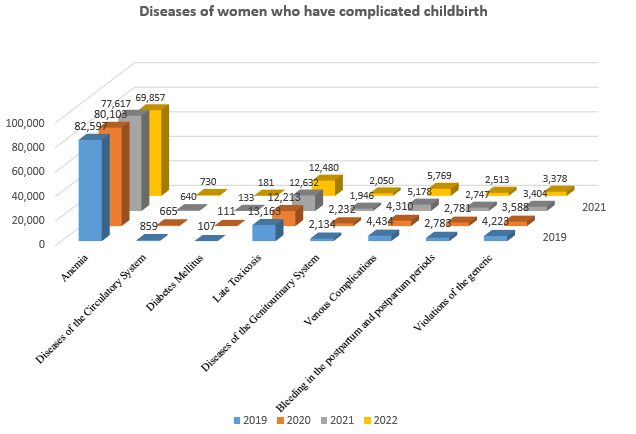
This was welcome as there were gradual reductions in postpartum bleeding suggesting that there might have been improvements in postpartum hemorrhage management [9-11]. However, the statistics show that there are still important areas that need to be addressed [12-14]. The increasing incidence of gestational diabetes and complications of circulatory and venous systems indicate the need for individualized approaches and intense health prevention programs. In particular, for women living in disadvantaged or disadvantaged positions, these findings present a new insight for healthcare professionals and policymakers to enhance the mother's health policies, optimize limited resources, and ensure that the right care is given to women in the prenatal and childbirth periods [15-21].
According to the updated guidelines of the American College of Obstetricians and Gynecologists, physical activity for pregnant women is recommended in the amount of at least 150 minutes of moderate aerobic exercise per week. New research highlights the importance of combining aerobic and strength exercises that help improve cardiovascular health, strengthen muscles, and improve flexibility [22]. A 2021 study conducted by Da Costa and co-authors showed that physical activity during pregnancy can significantly reduce the risk of preeclampsia, gestational diabetes, and hypertension. The study also noted that women who continued to exercise regularly were less likely to gain excess weight during pregnancy, which is associated with an improved metabolic profile [23].
Perales et al. (2016) demonstrated that women who engaged in regular physical activity during pregnancy were 30% less likely to require a cesarean section compared to their sedentary counterparts, a finding attributed to enhanced muscle tone and physical endurance [24]. Similarly, Mottola et al. (2018) reported that specialized exercise programs for pregnant women, including pelvic floor strengthening and breathing exercises, significantly reduced the duration of the active phase of labor and alleviated pain levels [25]. A most recent 2024 study highlighted that prenatal yoga was associated with lower stress and anxiety levels, contributing positively to labor outcomes. Furthermore, it also shows that regular aqua aerobics sessions during pregnancy not only decreased pain intensity during childbirth but also facilitated faster postpartum recovery [26].
An analysis of recent studies indicates a growing emphasis on physical preparation for childbirth in the Russian Federation, where women are increasingly participating in activities such as swimming, walking, yoga, aerobics, and aqua aerobics. Aqua aerobics, in particular, has garnered widespread acclaim and is recommended as a therapeutic exercise combining swimming, gymnastics, and yoga elements performed to music in water [27]. This approach has been shown to enhance prenatal fitness and prevent complications such as fetal asphyxia. Research consistently identifies aqua aerobics as one of the most effective methods for prenatal preparation, improving maternal endurance during labor and safeguarding fetal health by reducing the risk of intrauterine complications.
Pregnant women's psychological well-being related to physical activity has been extensively researched. A study conducted between 2020 and 2022 repeatedly shows that reasonable physical activity greatly lowers stress and anxiety experienced during pregnancy [28]. Regular yoga or Pilates practitioners among pregnant women showed a decreased prevalence of postpartum depression, according to Davenport et al. (2020). Comparably, it showed that participation in group-based physical training programs during pregnancy not only raised self-efficacy but also lowered anxiety related to birthing. These advantages are ascribed to the twin effects of physical exercise in improving psycho-emotional resilience and physiological fitness [29].
Since 2020, numerous new programs have been established to prepare expectant women for childbirth. The FitMom program incorporates aerobic activity, weight training, and yoga components tailored for pregnant women. This program yielded results indicating that participants experienced markedly reduced stress levels and expedited recovery following childbirth. Particular emphasis is placed on exercises designed to fortify the pelvic floor [30]. A study by Kazeminia et al. (2022) demonstrated that pelvic muscle strengthening exercises can mitigate the risk of injury in this region during childbirth and decrease the probability of urine incontinence post-delivery [31].
It is also important to emphasize that in Kyrgyzstan there are free schools for preparing for childbirth at perinatal centers and CSMs. However, due to the limited number of such facilities, many pregnant women are unable to visit them, especially in remote areas. Investigating this problem, we set a goal to analyze the physical fitness of pregnant women for childbirth in Osh in comparison with rural areas and develop practical recommendations on physical culture.
Conclusion
Improving maternal and fetal health outcomes requires an all-encompassing strategy combining social and medical elements to enhance women's health and physical readiness for childbirth. The crucial role that physical activity plays in improving a mother's health throughout pregnancy and maximizing results for the mother and child is becoming more well-acknowledged. Recent research done since 2020 shows that consistent physical activity not only reduces pregnancy-related difficulties but also greatly enhances the physical and psychological well-being of expectant women, therefore preparing them for a better labor and delivery experience. Women's physical readiness for delivery is much enhanced by primary healthcare facilities. To improve women's physical fitness and labor preparedness, focused interventions developed and applied inside these institutions are necessary. A sensible and efficient approach for reaching these objectives is structured prenatal fitness regimens, catered to personal needs and under professional supervision. While following professional rules and suggestions, such programs should take into account the particular physical traits and medical issues of every expectant woman. Encouragement of physical activity during pregnancy is especially important in the framework of mother health issues in low-income environments like Kyrgyzstan. Including these policies in the main healthcare system helps to close gaps in mother care, lower problems, and improve the general health and well-being of mothers and their children. This emphasizes how urgently a multidisciplinary strategy including healthcare providers, legislators, and community stakeholders is needed to guarantee that every pregnant woman has access to the tools and knowledge required to adopt and sustain healthy behaviors all through her pregnancy. Giving physical exercise top priority during pregnancy not only helps particular families but also improves public health results, therefore fostering a better and more robust society in LMICs.
Acknowledgments: None
Conflict of interest: None
Financial support: None
Ethics statement: The study followed the ethical guidelines laid out in the Declaration of Helsinki for Medical Research. Ethical approval was waived because the study used publicly available data from literature and national health statistics and had no direct interaction with human subjects. For further information, the corresponding author can be contacted.
References
- Ha LC, Naqvi M, Conley P, Bairey Merz CN, Barone Gibbs B, Levine LD, et al. Activity restriction and risk of adverse pregnancy outcomes. Am J Obstet Gynecol MFM. 2024;6(10):101470. doi:10.1016/j.ajogmf.2024.101470
- Bull FC, Al-Ansari SS, Biddle S, Borodulin K, Buman MP, Cardon G, et al. World Health Organization 2020 guidelines on physical activity and sedentary behaviour. Br J Sports Med. 2020;54(24):1451-62. doi:10.1136/bjsports-2020-102955
- Lin J, Feng H, Horswell R, Chu S, Shen Y, Hu G. Trends in the incidence of hypertensive disorders of pregnancy among the medicaid population before and during COVID-19. Womens Health Rep (New Rochelle). 2024;5(1):641-9. doi:10.1089/whr.2024.0045
- Bernardo D, Carvalho C, Mota J, Ferreira M, Santos PC. The influence of pregestational body mass index and physical activity patterns on maternal, delivery, and newborn outcomes in a sample of portuguese pregnant women: a retrospective cohort study. Port J Public Health. 2023;41(2):140-50. doi:10.1159/000531587
- National Statistical Committee of the Kyrgyz Republic. Statistics of the Kyrgyz Republic. Accessed December 17, 2024. Available from: https://stat.gov.kg/en/
- World Medical Association. World Medical Association Declaration of Helsinki: ethical principles for medical research involving human subjects. JAMA. 2013;310(20):2191-4. Available from: https://pubmed.ncbi.nlm.nih.gov/24141714/
- Traub A, Sharma A, Gongora MC. Hypertensive disorders of pregnancy: a literature review - pathophysiology, current management, future perspectives, and healthcare disparities. US Cardiol. 2024;18:e03. doi:10.15420/usc.2023.01
- Heim MA, Miquelutti MA, Makuch MY. Perspective of pregnant women regarding antenatal preparation: a qualitative study. Women Birth J Aust Coll Midwives. 2019;32(6):558-63. doi:10.1016/j.wombi.2018.11.016
- Tirupathi S, Shetty B, Chauhan RS. Youtube TM as a source of parent education for feeding plates in cleft lip and palate patients. Ann Dent Spec. 2023;11(1):31-4.
- Belaldavar C, Angadi PV. Knowledge and attitudes regarding use of chat GPT in dentistry among dental students and dental professionals. Ann Dent Spec. 2024;12(1):14-20.
- Siddiqui AY, Alothmani OS. Influence of the position of the apical foramen on the accuracy of electronic apex locator. Ann Dent Spec. 2023;11(3):5-8.
- Padma KR, Don KR, Dinesh B, Karthikeyan D. Antibiotics are current approaches to improve productivity using soil microbiome. World J Environ Biosci. 2023;12(3):33-9.
- Tende T, Abidemi K, Awoyemi AG, Folaranmi B, Ogunjinmi AA, AnthonyJaiyeola O, et al. Wildlife conservation in Nigeria: a perception of professionals and practitioners. World J Environ Biosci. 2023;12(3):40-6.
- Padma KR, Don KR, Anjum MR, Sindhu GS, Sankari M. Application of green energy technology for environmental sustainability. World J Environ Biosci. 2023;12(4):1-7.
- Calabrò E, Magazù S. Viruses inactivation induced by electromagnetic radiation at resonance frequencies: possible application on SARS-CoV-2. World J Environ Biosci. 2021;10(1):1-4.
- Kumar R. Toxic algae and effects of algal poisoning in animals and human beings. World J Environ Biosci. 2021;10(1):9-12.
- Alraddadi M, Alhazmi K. The twins-hit hypothesis of atopic dermatitis and autoimmune diseases. World J Environ Biosci. 2021;10(1):24-8.
- Madhukar CV. Antimicrobial and antioxidant potentials of carotenoid pigment produced by indigenous novel soil isolate Rhodococcus kroppenstedtii. World J Environ Biosci. 2021;10(1):29-34.
- Pimple NS. Study of digestive morphology, osteology of osteobrama vigorsii (Sykes, 1839) from nira river bhor, maharashtra. World J Environ Biosci. 2021;10(1):65-9.
- Sen K, Sanyal T, Karmakar SR. COVID-19 forced lockdown: nature’s strategy to rejuvenate itself. World J Environ Biosci. 2021;10(2):9-17.
- Egwunatum AE, Uyovbisere E, Umeh LC. Effect of forest-incubated composts on crude-oil soils for zea mays, L. cultivation in Delta State, Nigeria. World J Environ Biosci. 2022;11(3):14-20.
- ACOG. Physical activity and exercise during pregnancy and the postpartum period. Accessed September 17, 2024. Available from: https://www.acog.org/clinical/clinical-guidance/committee-opinion/articles/2020/04/physical-activity-and-exercise-during-pregnancy-and-the-postpartum-period
- Da Costa D, Ireland K. Perceived benefits and barriers to leisure-time physical activity during pregnancy in previously inactive and active women. Women Health. 2013;53(2):185-202. doi:10.1080/03630242.2012.758219
- Perales M, Calabria I, Lopez C, Franco E, Coteron J, Barakat R. Regular exercise throughout pregnancy is associated with a shorter first stage of labor. Am J Health Promot. 2016;30(3):149-54. doi:10.4278/ajhp.140221-QUAN-79
- Mottola MF, Davenport MH, Ruchat SM, Davies GA, Poitras VJ, Gray CE, et al. 2019 Canadian guideline for physical activity throughout pregnancy. Br J Sports Med. 2018;52(21):1339-46. doi:10.1136/bjsports-2018-100056
- Hicks LE, Graf MD, Yeo S. Prenatal exercise and its effects on postpartum mental health: systematic review and meta-analysis. Arch Womens Ment Health. 2024. doi:10.1007/s00737-024-01525-2
- Shuvalova MP, Yarotskaya EL, Pismenskaya TV, Dolgushina NV, Baibarina EN, Sukhikh GT. Maternity care in Russia: issues, achievements, and potential. J Obstet Gynaecol Can. 2015;37(10):865-71. doi:10.1016/s1701-2163(16)30019-6
- Park S, Marcotte RT, Staudenmayer JW, Strath SJ, Freedson PS, Chasan-Taber L. The impact of the COVID-19 pandemic on physical activity and sedentary behavior during pregnancy: a prospective study. BMC Pregnancy Childbirth. 2022;22:899. doi:10.1186/s12884-022-05236-3
- Davenport MH, McCurdy AP, Mottola MF, Skow RJ, Meah VL, Poitras VJ, et al. Impact of prenatal exercise on both prenatal and postnatal anxiety and depressive symptoms: a systematic review and meta-analysis. Br J Sports Med. 2018;52(21):1376-85. Available from: https://bjsm.bmj.com/content/52/21/1376
- Woodley SJ, Lawrenson P, Boyle R, Cody JD, Mørkved S, Kernohan A, et al. Pelvic floor muscle training for preventing and treating urinary and fecal incontinence in antenatal and postnatal women. Cochrane Database Syst Rev. 2020;5(5):CD007471. doi:10.1002/14651858.CD007471.pub4
- Kazeminia M, Rajati F, Rajati M. The effect of pelvic floor muscle-strengthening exercises on low back pain: a systematic review and meta-analysis on randomized clinical trials. Neurol Sci. 2023;44(3):859-72. doi:10.1007/s10072-022-06430-z
How to cite this article:
Citation Formats:
Contact Meral
Meral Publications
www.meralpublisher.com
Davutpasa / Zeytinburnu 34087
Istanbul
Turkey
Email: [email protected]