Comprehensive analysis of social policy of Kazakhstan in the field of inclusive education
Abstract
Inclusive education is the most important component of the social policy of the Republic of Kazakhstan. Inclusive education in Kazakhstan has achieved certain successes, but there are limitations and problems. The methodological basis of the study is a set of combined methods: desk research, content analysis and in-depth interviews, which made it possible to obtain a holistic view of the development of social policy in the field of inclusive education in Kazakhstan. Publications of Kazakhstani scientists in Scopus, Web of Science and in journals included in the list of the Committee for Quality Assurance in Science and Higher Education for 2015-2025 were analyzed. This approach made it possible to track the dynamics of scientific interest in the issue of inclusion and identify key areas of research discussions. The analysis showed that the largest share is occupied by articles devoted to the readiness of teachers for inclusive education (25.93%), the lowest share – publications devoted to ICT, digitalization and distance learning in inclusive education – 7 articles, or 8.64%, respectively. The results of these studies can serve as a methodological basis for the development of social policy in the field of inclusive education.
Keywords: Social policy, Inclusive education, Resources, Limitations, Analysis
Introduction
In the modern world, inclusive education is considered not only as a pedagogical approach, but also as an essential component of social policy aimed at ensuring equal rights and opportunities for all categories of citizens. According to international standards and the UN Convention on the Rights of Persons with Disabilities [1], states are obliged to ensure access of children with special educational needs to quality education on an equal basis with others. In the context of globalization and modernization of educational systems, the issue of inclusion is becoming an integral part of social justice and sustainable development [2].
At the global level, UNESCO materials serve as an important reference point, emphasizing the need to ensure the right of every child to quality education, regardless of his or her developmental characteristics [3]. Leading foreign researchers, such as T. Booth and M. Ainscow [4], developed the concept of Index for Inclusion, which became the basis for many educational reforms. An important contribution was also made by L. Florian [5], who proposed the concept of “inclusive pedagogy” focused on the diversity of students’ needs.
The national regulatory framework of Kazakhstan also enshrines the priority of inclusion. The main provisions are reflected in the State Program for the Development of Education and Science for 2016-2019, as well as in the Law on Education [6]. Researchers note that regulatory documents form the necessary framework, but practical implementation requires additional resources and methodological support [7, 8]. State policy is aimed at expanding inclusive practices, but fragmentation and insufficient coordination between different levels of governance are noted [9]. The introduction of inclusive education requires not only legislative changes, but also a transformation of public consciousness, language and terminology.
Kazakhstan is actively reforming the inclusive education system, seeking to ensure equal opportunities for all children, including children with special educational needs. Inclusive education has been enshrined in strategic documents, including the State Program for the Development of Education and Science, as well as national projects aimed at modernizing the educational environment. The Concept of Inclusive Policy in the Republic of Kazakhstan for 2025-2030 was adopted – a strategic document defining the development of inclusion. Social policy in this area is based on cooperation between the state, non-governmental organizations (NGOs) and educational institutions. NGOs in Kazakhstan actively contribute to the reform of inclusive education by revising policies, providing methodological support, promoting cultural change, and informing the public about children with special needs [10]. Resource centers in Kazakhstan contribute to the development of inclusive practices and the identification of opportunities for successful support of children with disabilities [11].
Over the years of independence, the state has taken a number of steps aimed at developing the education system, with the emphasis increasingly shifting to issues of accessibility and equality [12]. However, despite the political will and the formation of a legal framework, the implementation and development of inclusion faces a number of limitations associated with both institutional and socio-cultural barriers. This problem is of particular importance for the Republic of Kazakhstan.
On the one hand, there is a positive trend in the country: the number of schools implementing inclusive programs is growing; the training of speech therapists is expanding; there is an increase in the number of teachers who have improved their qualifications in the field of inclusive education; attention from the scientific community is increasing, which is reflected in the growth of publications on this topic.
On the other hand, a number of problems remain: a shortage of qualified personnel, overload of teachers in special schools, limited teaching materials, low readiness of parents and society as a whole to accept children with special educational needs into the educational space.
Literature review
The issue of inclusive education has been widely covered in both international and national research [13]. Inclusive education in Kazakhstan has achieved some success, but the concept is still poorly implemented in schools. Allan et al. [14] find that Kazakhstan has made progress towards inclusive education, but challenges remain in assessing and classifying children with disabilities, teacher resistance, and the influence of parent groups on policy and practice. Inclusive education in schools in Kazakhstan has advanced, but the concept remains poorly understood and mainly focuses on children with disabilities, highlighting the need for more effective implementation [15]. According to Agavelyan et al. [16], teachers in Kazakhstan have neutral attitudes towards inclusive education, with rural teachers and those who are confident in teaching children with special needs demonstrating the most positive attitudes towards inclusion. Passeka et al. [17] in the article “Bridging the gap: special educators’ perceptions of their professional roles in supporting inclusive education in Kazakhstan” indicate that special educators in Kazakhstan understand disability as a dialectical concept, emphasizing the importance of eliminating environmental and social barriers for people with special needs. All this indicates that inclusive education is not only a pedagogical, but also a socio-political phenomenon that requires a comprehensive analysis.
Particular attention is paid to pedagogical training and professional readiness of teachers to work in an inclusive environment. Modern research shows that the promotion of inclusion in Kazakhstan is uneven. On the one hand, there is a positive trend – the development of inclusive infrastructure, an increase in the number of schools and programs, and the training of speech therapists [18]. On the other hand, a number of problems related to staff training remain [19-22].
Thus, the studies of Makoelle and Burmistrova [23] showed that the teacher training system in Kazakhstan faces the challenges of a lack of practice-oriented programs. According to Makoelle [24], pedagogical universities in Kazakhstan lack a holistic strategy for preparing future teachers for inclusive education, which requires specialized courses and trainings for teachers of pedagogical universities. Similar conclusions are presented in the work of Butabayeva et al. [25], where the adaptation of international tools for assessing teacher effectiveness revealed the need to localize approaches to the Kazakhstani context.
Regional studies [26] emphasize the importance of the architectural and environmental environment for the successful integration of children with special educational needs, and a comparative analysis [27] reveals the relationship between the well-being of teachers and the formation of an inclusive environment.
An equally significant area is the study of the social aspects of inclusion. In particular, the work of Musa et al. [28] showed that family and sibling relationships have a significant impact on the socialization and educational success of children with disabilities. These results expand the understanding of inclusion as a multidimensional phenomenon that goes beyond the school space.
This study is due to the following factors:
- The need for theoretical and practical understanding of state social policy in the field of inclusive education;
- The presence of contradictions between the regulatory framework and the practical implementation of inclusive programs;
- The need to identify resources and limitations that affect the effectiveness of the implementation of inclusive practices in Kazakhstan;
- Growing interest of the scientific community in the issues of accessibility of education for all categories of citizens.
The purpose of the study is to comprehensively analyze the social policy of Kazakhstan in the field of inclusive education, identify its resources and limitations, and suggest directions for improving social policy in this area.
This study uses a mixed method in combination of theoretical research with quantitative analysis of publication activity and qualitative analysis of expert interviews, which allows for a comprehensive consideration of the development of inclusion not only from the standpoint of academic discourse, but also from the point of view of practical experience.
Materials and Methods
The methodological basis of the study is based on the use of a set of complementary approaches, including a combined research method: desk research, content analysis and in-depth expert interviews (Table 1).
|
Table 1. Research plan |
||
|
Research stages |
Methods |
Research objective |
|
Stage 1 |
Desk research |
Identification of publication activity of Kazakhstani scientists in the field of inclusive education for the period 2015-2025 |
|
Stage 2 |
Content analysis |
Identification of publications to highlight key thematic areas discussed in the academic community |
|
Stage 3 |
In-depth expert interview |
Obtaining a “live” understanding of the situation from specialists directly working in the education system |
|
Stage 4 |
Research results |
Processing and generalization of the obtained results |
This multi-level approach will allow not only to trace the dynamics of scientific interest in the topic of inclusive education, but also to compare the results of the analysis of publications with the real experience of teachers and specialists working in this field.
Desk research
At the first stage, a desk research was conducted, the purpose of which was to identify the publication activity of Kazakhstani scientists in the field of inclusive education for the period 2015-2025. Journals included in the Scopus, Web of Science databases and in the list of the Committee for Quality Assurance in Science and Higher Education were selected as the basis for analysis, since they provide a certain level of academic representativeness and recognition. These databases not only reflect current challenges in education, but also open up new opportunities for the development of effective approaches to inclusive education.
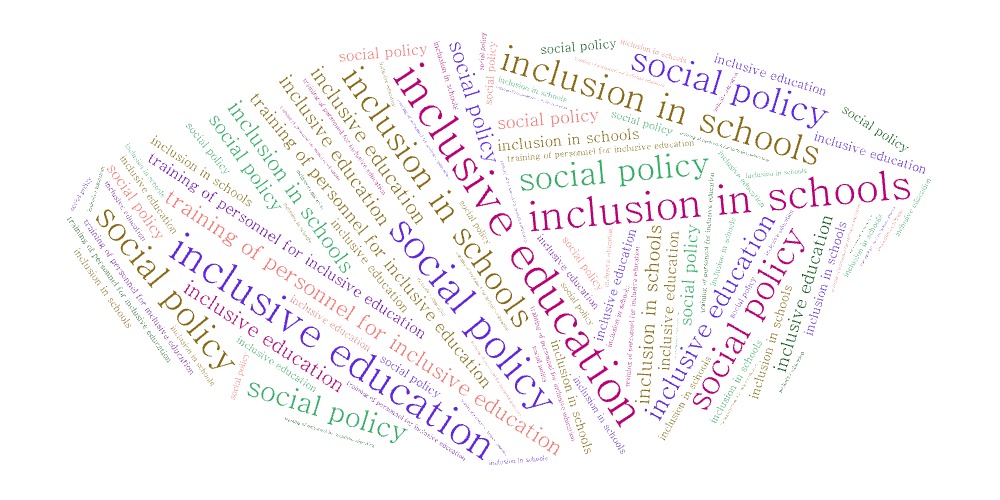
The search for publications was carried out using the keywords: “social policy”, “inclusive education”, “inclusion in schools”, “training of personnel for inclusive education” (Figure 1).
|
|
|
Figure 1. Word cloud for key terms |
The results were then systematized by year and by number of publications, which allowed to identify trends in the growth or decline of scientific interest. The quantitative analysis was accompanied by a comparison of publication dynamics with key events in Kazakhstan’s educational policy (for example, the launch of state programs, the adoption of new regulations). This allowed to establish possible correlations between the development of the legal framework and the growth of academic interest.
Content analysis
The next stage was the content analysis of the identified publications of Kazakhstani scientists to identify key thematic areas discussed in the academic community. The following categories were used for the analysis:
- legislative regulation (availability of regulatory documents, degree of their elaboration);
- international experience and comparative studies (comparison of Kazakhstani practices with foreign ones);
- training of teaching staff (speech therapists, primary school teachers, school psychologists);
- social aspects of inclusion (parental attitudes, perception on the part of students, stigmatization issues);
- institutional resources (material and technical base of schools, availability of specialized manuals, availability of equipped classrooms).
In-depth interview
In order to supplement the desk research with practical data, a qualitative sociological method was used – in-depth expert interviews. This method allowed to get a “live” understanding of the situation from specialists directly working in the education system.
The study involved 10 participants, including:
- 3 teachers of general education schools working with children with special educational needs in Shymkent city;
- 2 speech therapists with more than 10 years of experience;
- 2 teachers of pedagogical universities involved in training specialists in the field of inclusive education;
- 1 parent of a student under the inclusive education program;
- 1 school student of a general education school;
- 1 specialist in inclusive education of Department of Education in Shymkent city.
Before the study, a conversation was held with all participants, they were familiarized with the purpose of the interview. The study participants gave informed consent to participate. The interviews were conducted in compliance with the principles of confidentiality and anonymity. The collected data were used exclusively for scientific purposes.
A guide was prepared for the interview, including 15 questions divided into three semantic blocks:
I. Problems of implementing inclusive education;
II. Resources and positive changes;
III. Prospects and suggestions.
The interviews were conducted in person and online, each interview lasting 40-60 minutes. The data obtained were coded, transcribed and analyzed using the method of thematic content analysis.
The data were systematized and compared with the number of scientific publications by region, which made it possible to identify certain correlations between practical and academic interest. The use of a combined methodology – desk analysis, content analysis and in-depth interviews – made it possible to obtain a holistic view of the development of social policy in the field of inclusive education in Kazakhstan. This approach provides both a quantitative and qualitative basis for conclusions and makes the study more representative.
The main resources for the development of inclusive education will be the adoption of international standards, the development of social protection programs and the adaptation of legislation to inclusive principles. Non-governmental organizations act as agents of change and participate in the revision of policies and the formation of public opinion. Resource centers at schools, supported by NGOs and the state, promote the development of inclusive practices, individualization of education and effective interaction between teachers, parents and specialists.
Among the main limitations, it is worth noting:
- insufficient understanding of inclusion: the concept is often reduced to working only with children with disabilities, and not with a wider range of diversity;
- resistance and stereotypes among teachers and parents;
- dominance of the medical model of disability;
- lack of infrastructure, resources, qualified personnel and coordinated policies [29].
Results and Discussion
Desk research results
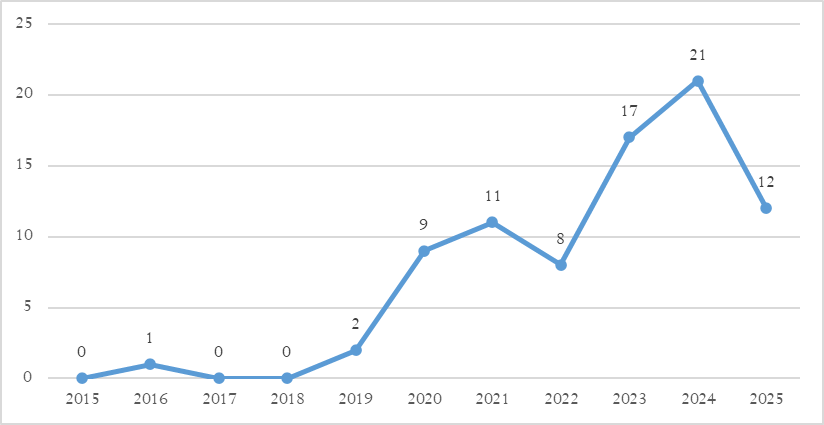
The desk study of the publication activity of Kazakhstani scientists using the keywords “social policy”, “inclusive education”, “inclusion in schools”, “training of personnel for inclusive education” for the period 2015-2025 allowed to identify a number of important trends. First of all, it should be noted that the interest of the scientific community in the problems of inclusion is growing almost every year, which is directly related to political, social and institutional changes in the country’s educational system.
At the beginning of the 21st century, the term “inclusion” was used sporadically in Kazakhstani publications, more often in the context of international documents. However, since 2015, there has been an increase in interest in the topic, the number of articles and mentions in the media has more than doubled. In 2015, not a single article on inclusion was published in journals included in the list of the Committee for Quality Assurance in Science and Higher Education. In 2016, only one material on this issue was published, which indicates a gradual formation of research interest in inclusion issues. However, in 2017-2018, publication activity again decreased to zero. The situation changed in 2019, when 2 articles appeared in domestic pedagogical journals. Publications of this period were mainly of a review nature: they considered international experience in implementing inclusion, analyzed the legal framework of Kazakhstan, and took the first steps in understanding how inclusive education can be implemented in domestic schools. In 2020, the number of publications increased to 9 articles. Despite the COVID-19 pandemic, the attention of researchers to the topic of inclusive education has increased, which is explained by the transition of schools to a distance learning format and the need to find new solutions for children with special educational needs, which indicated an expansion of the research base and a transition from purely theoretical reviews to practical issues of implementing inclusion in schools. Starting from 2021, the publication activity of Kazakhstani scientists began to show steady growth: 11 articles in 2021, 8 in 2022, 17 in 2023 and 21 in 2024. During this period, research has become increasingly applied in nature, with attention paid to issues of teacher training, analysis of barriers to the implementation of inclusive practices, as well as regional features of their implementation. According to preliminary data, in 2025, about 12 publications were published in the first half of the year (Table 2).
|
Table 2. Number of published articles by year in the field of inclusive education |
|||||||||||
|
Years |
2015 |
2016 |
2017 |
2018 |
2019 |
2020 |
2021 |
2022 |
2023 |
2024 |
2025 1st half year |
|
Number |
0 |
1 |
0 |
0 |
2 |
9 |
11 |
8 |
17 |
21 |
12 |
Despite the decrease compared to the previous year, this indicator remains significantly higher than the 2019-2020 level, which indicates the strengthening of the scientific community’s interest in the issue of inclusion in education.
|
|
|
Figure 2. Dynamics of publications in the field of inclusive education (2015-2025) |
Key issues reflected in the publications:
-insufficient qualifications of teaching staff to work in inclusive classes;
- limited material and technical resources of schools;
- formal nature of the implementation of some state programs;
- low awareness of parents about the opportunities and rights of their children;
- problems with interdepartmental interaction (education, health care, social protection).
In recent years, the attention of researchers has focused on the practical aspects of implementing inclusion – examples of successful schools, methodological developments, the use of digital technologies for remote support of children with disabilities (Table 3).
|
Table 3. Comparison of key studies on inclusive education in Kazakhstan |
|||
|
Paper |
Methodology |
Sample |
Key findings |
|
Inclusive education reform in Kazakhstan: civil society activism from the bottom-up K. Rollan and M. Somerton International Journal of Inclusive Education, 2019 [10] |
Qualitative interviews with NGOs |
7 NGO representatives |
NGOs are key change agents, contribute to policy revision and implementation of inclusion |
|
Defining spaces: resource centres, collaboration, and inclusion in Kazakhstan M. Somerton et al. Journal of Educational Change, 2021 [11] |
Case study, interviews |
22 participants (teachers, parents, specialists) |
Resource centers improve inclusive practices, coordinated policy is needed |
|
Optimal model of social policy to improve living standards and ensure the quality of life of the population (on the example of inclusive education S. Sakenova et al. Bulletin of L.N. Gumilyov Eurasian National University. Pedagogy. Psychology. Sociology series, 2024 [12] |
Policy analysis, literature review |
- |
Implementation of ILO, AAAG standards, recommendations for strengthening social protection |
|
Schools’ Transition Toward Inclusive Education in Post-Soviet Countries: Selected Cases in Kazakhstan T. Makoell SAGE Open, 2020 [15] |
Qualitative interviews |
12 schools, various stakeholders |
The concept of inclusion is limited, requires expansion of understanding and practices |
|
Teacher education and inclusive education in Kazakhstan T. Makoell and V. Burmistrova International Journal of Inclusive Education, 2025 [23] |
Qualitative interviews, document analysis |
5 universities, 25 teachers and students |
Insufficient preparation of teachers for inclusion, specialized courses are needed |
Content analysis results
During the study, a content analysis of scientific publications covering inclusive education in Kazakhstan was conducted. The main goal of this stage was to identify key topics, discourses and problem areas related to the implementation of inclusion in the secondary education system. An analysis of published articles in journals included in the list of the Committee for Quality Assurance in Science and Higher Education showed that over the period 2015-2025, Kazakhstani scientists published 81 studies devoted to inclusive education. The topics of these publications are diverse, which reflects the multifaceted nature of the problem of introducing inclusion into the education system.
The articles can be conditionally grouped into the following areas (Table 4):
|
Table 4. Number of publications by Kazakhstani scientists in thematic areas |
||
|
Topic of the publication |
Number of publications |
Contents of the publication |
|
Preschool inclusive education and young children |
8 articles (9.88%) |
Issues of organizing inclusion in preschool organizations, sociological analysis of preschool education, as well as comparison of national models |
|
Readiness of teachers for inclusive education |
21 articles (25.93%) |
Professional competencies of future teachers, issues of their readiness, motivation, as well as methodological approaches to supporting children with special educational needs |
|
Psychological and pedagogical support for children with special educational needs |
15 articles (18.52%) |
Support for students with autism spectrum disorders, hearing impairments, mental disorders; the role of speech and language therapists, psychologists, social educators |
|
Social policy of inclusive education, international experience and comparative studies |
12 articles (14.81%) |
Study of international experience, as well as problems of integration of inclusive education into social policy and education system of Kazakhstan |
|
Higher education and training of specialists in inclusive education |
10 articles (12.34%) |
Factors of inclusion in universities, features of training of social educators, professional self-determination of students with special needs |
|
ICT, digitalization and distance learning in inclusive education |
7 articles (8.64%) |
Application of digital technologies, development of software solutions and strategies for distance inclusive education |
|
Creative approaches and special methods |
8 articles (9.88%) |
STEAM approaches, use of music, work training, as well as critical thinking as a tool for forming inclusive practices |
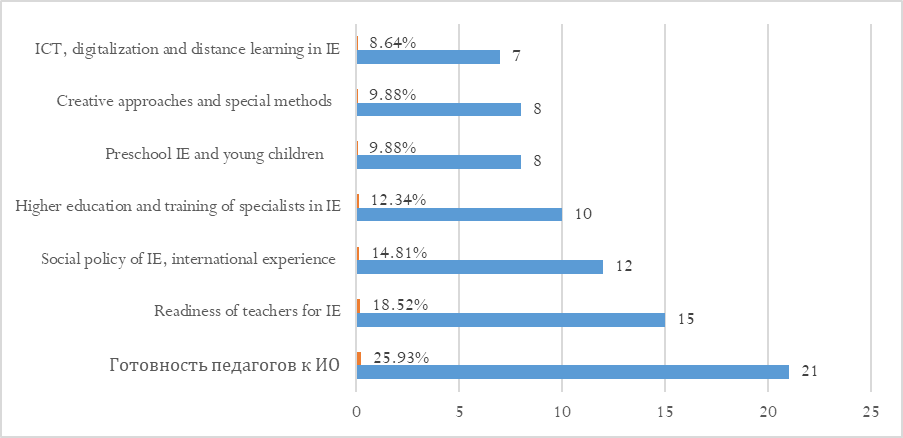
The largest share is occupied by articles devoted to the readiness of teachers for inclusive education (25.93%), as well as issues of psychological and pedagogical support for children with special educational needs (18.52%). The lowest rate is for publications devoted to ICT, digitalization and distance learning in inclusive education – 7 articles, respectively 8.64%. This indicates the priority of training personnel and providing targeted support to students with special educational needs in the Kazakhstani education system (Figure 3).
|
|
|
Figure 3. Percentage of publications on inclusive education |
Qualitative research highlights the importance of cross-sectoral collaboration, advanced training of teachers, and transformation of public consciousness. At the same time, despite positive developments, significant challenges remain: territorial disparities, lack of infrastructure, poor teacher training, and limited involvement of parents of children without disabilities. Further development of inclusive education requires coordinated policies, comprehensive staff training programs, and systematic work to change public attitudes.
|
Table 5. Key claims and supporting evidence in the analyzed publications |
|||
|
Claim |
Evidence Strength |
Reasoning |
Papers |
|
NGOs play a key role in promoting inclusive education |
Strong |
Numerous studies confirm the contribution of NGOs to policy reform, methodological support and changing public opinion |
1,198 |
|
Resource centers promote inclusive practices |
Strong |
Case studies and interviews show the positive impact of resource centers on schools and stakeholders |
248 |
|
Insufficient training of teachers is a key barrier |
Strong
|
Qualitative and quantitative research reveals a lack of specialized courses and teacher confidence |
152,935 |
|
The concept of inclusion is often limited to children with disabilities |
Moderate |
Interviews and policy analysis reveal a narrow understanding of inclusion among stakeholders |
61,836 |
|
Lack of infrastructure |
Moderate |
Sociological research and parent/teacher surveys document a lack of material and human resources |
122,729 |
|
Stereotypes and the dominance of the medical model hinder integration |
Moderate |
Language analysis |
101,835 |
The results of the content analysis allow to conclude that the topic of inclusive education in Kazakhstan is gradually moving beyond the stage of declarative discussion and is beginning to acquire an applied nature. However, publications about problems, rather than achievements, remain dominant. This indicates the need for further empirical research and dissemination of successful practices.
In-depth interview results
To better understand the problems and prospects for the development of inclusive education, a series of in-depth interviews were conducted with key stakeholders in the educational process. The study involved teachers, inclusive education specialists of the Department of Education, parents of children with special educational needs, as well as the students themselves involved in inclusive education in Shymkent city. This approach allowed to identify subjective perceptions, hidden barriers and real practical difficulties that cannot be detected solely through statistical data or document analysis.
The main results of the interview can be grouped as follows:
Position of teachers of general education schools
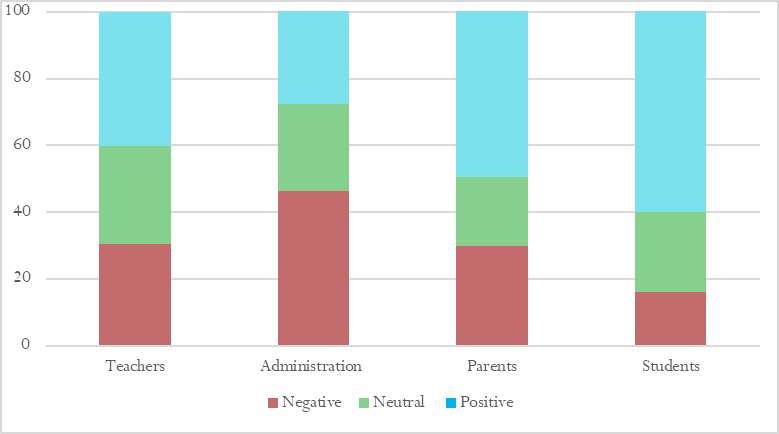
Most of the interviewed teachers noted a lack of specialized knowledge and methods of working with children with various forms of disabilities or developmental disabilities. Despite having basic experience, many teachers admitted that they feel insufficiently prepared to work in inclusive classes. At the same time, teachers emphasized the importance of additional advanced training courses, exchange of experience with colleagues, and methodological support from specialized centers.
Position of school administration
Representatives of the management of educational institutions indicated that the main barrier to the development of inclusion is associated not so much with the lack of a regulatory framework, but with limited financial and human resources. The leaders noted a shortage of teacher assistants, tutors, psychologists, and speech and language therapists. An additional difficulty is the high workload of the teaching staff and the limited budget, which prevents the renewal of the material and technical base to support special educational needs.
Position of parents of children with special educational needs
Parents of children with special educational needs demonstrated an ambivalent attitude towards inclusive education. On the one hand, they noted the positive impact of inclusion on the child’s socialization, adaptation, and development of communication skills. On the other hand, concerns were expressed about possible discrimination, insufficient attention from teachers, and the psychological unpreparedness of peers. Some parents indicated that they themselves lacked information and psychological support in the process of integrating their child into the school environment.
Position of students
The children’s responses were varied. Students with special educational needs generally positively assessed the possibility of studying in regular schools, but noted difficulties in adapting to the school curriculum and the lack of an individual approach. Classmates without disabilities demonstrated different levels of tolerance: from a positive attitude and desire to help – to indifference and even manifestations of hidden discrimination.
|
|
|
Figure 4. Evaluation of inclusive education by different groups of respondents |
The in-depth interviews revealed key problem areas that can be taken into account when developing national strategies for further implementation of inclusive education in Kazakhstan. The interview was divided into three stages (Table 6):
|
Table 6. Stages of the in-depth interviews |
||
|
Problems of implementing inclusive education |
Resources and positive changes |
Prospects and proposals |
|
-insufficient training of teachers to work with children with special educational needs; -lack of sufficient methodological base and practical tools; -low level of material and technical equipment of schools; -lack of personnel – specialists (speech therapists, speech and language therapists, tutors, psychologists); -formal nature of many initiatives, when the implementation of inclusion is reduced to reporting, and not real work; -insufficient awareness of parents and sometimes negative attitudes from parents of other students; -barriers in infrastructure (inaccessible environment, lack of ramps, elevators, special toilets). |
-state policy is aimed at developing inclusion, there are adopted regulations; -the number of schools that implement inclusive education practices is increasing; -courses and programs for improving the qualifications of teachers are appearing; -there has been an improvement in the equipment of educational organizations; -purchase of equipment, adapted textbooks; -participation of NGOs, international organizations, as well as the activity of parent communities, which creates additional support. |
-systematic training of personnel is necessary: regular courses, specializations, exchange of experience with foreign countries; -it is important to create methodological centers and banks of practical solutions for schools; -strengthening the material and technical base – equipping schools, modernizing buildings, creating an accessible environment; -forming an inclusive culture in schools and society; -working with parents, educational campaigns; -introducing monitoring of the quality of inclusive education, and not just quantitative indicators; -shifting the emphasis from formal reports to real conditions for children; -ensuring interdepartmental interaction (education, health care, social protection); -using international experience. |
The interview results confirmed the findings of the desk study: despite positive changes in the field of inclusive education (expansion of the number of schools, introduction of advanced training programs), a number of systemic limitations remain – personnel shortages, lack of methodological manuals and weak readiness of society to fully accept the principles of inclusion. These data not only confirm the findings obtained using other research methods, but also provide grounds to assert that further development of inclusion in Kazakhstan is possible only with a comprehensive approach, including personnel training, material support and institutional support.
The research results showed that successful implementation of inclusion requires a comprehensive approach, including:
- systematic training of teaching staff;
- psychological and methodological support for parents;
- creation of a friendly school environment that develops tolerance and empathy in children;
- expansion of resources for personnel and material and technical support.
To objectively understand the state of inclusive education in Kazakhstan and identify trends in its development, an analysis of statistical data on general education schools introducing elements of inclusion was conducted. The official reports of the Ministry of Education of the Republic of Kazakhstan, data from the Statistics Committee, and regional reports of education departments were used as sources. According to official data, as of the 2022-2023 academic year, there were over 6,233 schools in the country educating children with special educational needs (SENs). However, the actual level of accessibility of educational services varies significantly depending on the region. Thus, in large cities (Astana, Almaty, Shymkent), there is a higher concentration of inclusive classes and the availability of support specialists (speech therapists, speech and language therapists, tutors). While in rural areas, there is often a lack of personnel and material and technical support.
According to the Ministry of Education of the Republic of Kazakhstan, the number of schools with inclusion has shown a steady upward trend in recent years. If in the early 2010s only a small number of schools were ready to accept students with special educational needs, today inclusive practices cover a significant number of educational institutions. At the same time, the rate of expansion of inclusive schools in different regions of the country varies. Inclusion is developing most actively in cities of national significance, where there are more resources, specialists and methodological support, while in rural areas this process is much slower. The analysis showed that on average, for every 1,000 schoolchildren there are 28-35 children with special educational needs. At the same time, only about 60% of them study in inclusive education, while the rest continue to attend special correctional institutions or are educated at home. A comparative analysis by region revealed that the highest level of inclusion implementation is observed in Almaty and Astana (more than 70% of schools have inclusive classes), while in Mangistau, Zhambyl and Kyzylorda regions this figure is below 40%.
Particular attention was paid to the provision of schools with human resources. Thus, as of 2023, approximately 3,200 speech therapists and 2,800 speech and language therapists work in Kazakhstan, while the need is estimated to be at least twice as high. The data show that, on average, there are 1-2 speech therapists or speech and language therapists per inclusive school, which is clearly insufficient to fully support all students. In addition, only some teachers have undergone retraining in inclusion issues, which confirms the results of previous research methods (content analysis and interviews). This means that a significant number of schools do not actually have the ability to provide a full range of support to children with special educational needs.
In addition, the academic performance of children with special educational needs was analyzed. The data show that with proper support (tutor, psychologist, speech therapist), the academic success of children with special educational needs is close to the average of their peers. At the same time, in the absence of support, there are significant gaps in knowledge and high dropout rates.
As for the infrastructure, the analysis showed that only about 40% of schools are adapted for people with limited mobility: equipped with ramps, elevators, specialized sanitary rooms. At the same time, in rural schools this figure does not exceed 15-20%.
Statistical analysis revealed the following trends:
- inclusive education is developing dynamically, but unevenly across regions;
- the key barriers are the staffing shortage and the low level of infrastructural adaptation of schools;
- positive results are achieved mainly where there is comprehensive support for the child (tutor, speech therapist, psychologist).
This analysis allowed to obtain quantitative indicators reflecting the real state of affairs in the field of inclusive education, as well as to identify trends and problem areas in the development of the system. The analysis of statistics also showed that there is a certain imbalance in the structure of inclusive schools: some schools fully integrate children with special needs into the educational process, providing them with access to general education programs, while others are limited to creating separate classes or special groups. This indicates the need for a systemic approach to the implementation of inclusion, as well as the development of uniform quality standards.
No less important is the analysis of statistics on school equipment. Despite the fact that the state annually allocates funds for the purchase of specialized equipment and adaptation of the educational environment, the level of technical support remains uneven. Thus, in some schools modern technologies have already been introduced (special programs, tactile textbooks, systems for visually impaired and hearing-impaired children), while in others the educational process is still based on traditional methods without taking into account the special needs of students.
Statistical analysis allowed to record the following key results:
- the number of inclusive schools is growing, but the process is uneven across regions;
- the staffing and resource provision of inclusive schools remains insufficient;
- there is a need to unify inclusive education standards and improve the qualifications of teachers;
- the material and technical base of schools requires further modernization and funding.
The conducted study allowed to comprehensively consider the problem of inclusive education in Kazakhstan, identifying its key achievements and challenges. The work used combined methods – desk research, content analysis of regulatory documents and publications, in-depth interviews with teachers and parents, as well as analysis of statistical data on schools with inclusion. This multi-level approach provided a holistic and objective understanding of the situation.
The results of the study showed that Kazakhstan is actively moving towards creating conditions for inclusion:
- a regulatory framework is being formed;
- state programs are being implemented;
- the number of schools focused on the integration of children with special educational needs is increasing.
At the same time, there are gaps in practical implementation associated with a shortage of personnel, the lack of a sufficient material and technical base and insufficient involvement of society.
The content analysis revealed that in official documents inclusion is treated as one of the priorities of educational policy. However, publications by teachers and researchers note a discrepancy between regulatory guidelines and the actual state of affairs, which requires increased monitoring, practical support and methodological support for schools. In-depth interviews demonstrated that the success of implementing inclusion largely depends on the personal readiness of teachers, their professional training and psychological stability. Parents, in turn, note the need for greater openness of schools, dialogue with teachers, and access to specialized resources. It is important that the interviews recorded positive dynamics in changing society’s attitudes towards children with special needs, although stereotypes and social barriers still remain.
The analysis of statistical data on inclusive schools showed a quantitative increase in educational institutions ready to accept children with disabilities. At the same time, qualitative indicators (learning outcomes, level of children’s socialization, parental satisfaction) have not yet reached the required values, which requires additional measures to improve the effectiveness of programs.
Conclusion
In general, despite significant progress, sustainable development of inclusive education in Kazakhstan requires a comprehensive approach, intersectoral interaction and continuous monitoring of the effectiveness of the measures being implemented.
Research shows that Kazakhstan has made significant progress in the development of inclusive education, especially through cooperation with NGOs, the creation of resource centers and the adaptation of international standards. The study confirms that Kazakhstan is at the stage of active development of an inclusive education model.
The result of the work was the understanding that inclusion is not only a matter of pedagogy, but also a cultural and social process that requires a change in the value systems of society. The implementation of these conditions will allow Kazakhstan to get closer to international standards and ensure equal educational opportunities for all children. Kazakhstan has formed a comprehensive system of inclusive education, which requires the role of NGOs, resource centers and state support. However, for development, a broader understanding of inclusiveness, overcoming stereotypes and a coordinated policy, respect for the interests of all participants in the process are necessary. Further development is possible provided that an integrated approach is taken, including:
- systematic training and retraining of teachers;
- equipping schools with modern teaching and adaptation tools;
- creating an effective mechanism for monitoring the quality of inclusive education;
- strengthening the partnership between school, family and society.
The authors concluded that further research should be aimed at studying regional differences, long-term effects of inclusive programs and the involvement of parents and children with disabilities in policy formation:
- regional differences will help identify inequalities and develop targeted support measures for different regions of the country;
- assessing the long-term impact will help adjust policies and scale up successful practices;
- mechanisms for involving parents and children with disabilities in the formation of inclusive policies will ensure that the interests of all participants in the process are taken into account and will increase the sustainability of reforms.
Acknowledgments: None
Conflict of interest: None
Financial support: This study was funded by M. Auezov South Kazakhstan University within the framework of the intra-university research project “Zhas Galym” SKU2024-024 "Social policy in the field of inclusive education in Kazakhstan: resources and constraints".
Ethics statement: None
References
- United Nations, Department of Economic and Social Affairs, Social Inclusion [Internet]. Convention on the Rights of Persons with Disabilities; 2006. Available from: https://social.desa.un.org/issues/disability/crpd/convention-on-the-rights-of-persons-with-disabilities-articles
- Helmer J, Kasa R, Somerton M, Makoelle TM, Hernández-Torrano D. Planting the seeds for inclusive education: One resource centre at a time. Int J Incl Educ. 2023;27(5):586-602. doi:10.1080/13603116.2020.1864791
- Galguera MP. UNESCO (2015). Education for all 2000-2015: Achievements and Challenges. EFA Global Monitoring Report 2015. Paris, France. Publication by the United Nations Educational Scientific and Cultural Organization. 499 pp. ISBN- 978-92-3-10085-0. J Supranat Polic Educ. 2015;3:328-30.
- Booth T, Ainscow M. Index for inclusion: Developing learning and participation in schools. Centre for Studies on Inclusive Education; 2002.
- Florian L. The concept of inclusive pedagogy. In: Hallett F, Hallett G, editors. Transforming the role of the SENCO. Achieving the national award for SEN coordination. Vol. 5. Berkshire: Open University Press; 2010. p. 61-72.
- Omarova BA, Zhadauova ZhA. Some issues of improving the law of the Republic of Kazakhstan “On education”. Grand Altai Res Educ. 2022;1(17):43-52.
- Belyakov NI, Rusanov VP. Inclusive education in the Republic of Kazakhstan. Bull Almanach Sci Assoc France-Kazakhstan. 2018;1:59-67.
- Turlubekova MB, Bugubaeva RO. Inclusive education in Kazakhstan: analysis of the organizing process and the possibility of its further development. Central Asian Econ Rev. 2021;3:89-109. doi:10.52821/2224-5561-2021-3-89-109
- Maksatova A. Development of inclusive education for students with disabilities in Kazakhstan. InterConf+. 2024;50(221):80-7. doi:10.51582/interconf.19-20.10.2024.010
- Rollan K, Somerton M. Inclusive education reform in Kazakhstan: Civil society activism from the bottom-up. Int J Incl Educ. 2019;25:1109-24. doi:10.1080/13603116.2019.1599451
- Somerton M, Helmer J, Kasa R, Hernández-Torrano D, Makoelle TM. Defining spaces: Resource centres, collaboration, and inclusion in Kazakhstan. J Educ Change. 2021;22:315-34. doi:10.1007/s10833-020-09384-1
- Sakenova S, Baigabylov N, Akpanov A. Optimal model of social policy to improve living standards and ensure the quality of life of the population (on the example of inclusive education). Bull LN Gumilyov Eurasian National Univ Ped Psychol Sociol Ser. 2024;147(2):660-71. doi:10.32523/2616-6895-2024-147-2-660-671
- Parmankulova P, Zholdasbekova S, Kabylbekova Z, Saipov A, Mustapaeva T. Analytical review of the use of artificial intelligence in the diagnosis and prevention of teacher burnout in inclusive settings. Int J Innov Res Sci Stud. 2025;8(5):1113-6. doi:10.53894/ijirss.v8i5.8954
- Allan J, Omarova T. Disability and inclusion in Kazakhstan. Disabil Soc. 2021;37:1067-84. doi:10.1080/09687599.2020.1867073
- Makoelle T. Schools’ transition toward inclusive education in post-Soviet countries: Selected cases in Kazakhstan. SAGE Open. 2020;10(2). doi:10.1177/2158244020926586
- Agavelyan RO, Aubakirova SD, Zhomartova AD, Burdina EI. Teachers’ attitudes towards inclusive education in Kazakhstan. Integr Educ. 2020;24(1):8-19. doi:10.15507/1991-9468.098.024.202001.008-019
- Passeka Y, Somerton M. Bridging the gap: Special educators’ perceptions of their professional roles in supporting inclusive education in Kazakhstan. Disabil Soc. 2024;39(6):1380-401. doi:10.1080/09687599.2022.2160925
- Rysbekova ST, Rysbekov TZ. Inclusive education in Kazakhstan. In: Education of adults in the modern educational space: Problems and prospects. Part 2. Ekaterinburg: Ural State Pedagogical University; 2015. p. 164-72.
- Tebenova KS, Dakhbai BD, Rymkhanova AR, Zhusupbekova ZD, Museeva GN. Training problems of educators to work in conditions inclusive education. Int J Exp Educ. 2015;3:168-71.
- Jilbaev ZhO, Syrymbetova LS. Empirical background preparation of teachers for inclusive education in the Republic of Kazakhstan. Modern Probl Sci Educ. 2015;6:399. Available from: https://science-education.ru/ru/article/view?id=23212
- Nurmagambetova ZhS. Training teachers for the implementation of inclusive education in the Republic of Kazakhstan. Inklyuziya v obrazovanii. 2016;4(4):36-42.
- Rymkhanova AR, Alshynbekova GK, Salikov ZhK, Museeva GN, Amanbai ZhS. The issue of training teachers implements inclusive practices. Int J Appl Fundam Res. 2016;1(2):267-9. Available from: https://applied-research.ru/ru/article/view?id=8365
- Makoelle T, Burmistrova V. Teacher education and inclusive education in Kazakhstan. Int J Incl Educ. 2025;29(4):447-63. doi:10.1080/13603116.2021.1889048
- Makoelle T. Inclusive education in Kazakhstan: Achievements and challenges. Bildung und Erziehung. 2022;75(4):408-29. doi:10.13109/buer.2022.75.4.408
- Butabayeva L, Sharma U, Forlin C, Abildina S, Ismagulova S, Nogaibayeva G. Inclusive practices in Kazakhstan: Validating the teacher efficacy for inclusive practice scale for the local context. Int J Dev Disabil. 2025;1-15. doi:10.1080/20473869.2025.2492091
- Gvozdikova T, Amandykova D. Promoting inclusive education in Kazakhstan: Environmental and architectural aspects. ISVS e-J. 2023;10(4):201-10.
- Kozlova M, Ryabichenko T. Inclusive education in schools in Russia and Kazakhstan: Attitudes and well-being of teachers as related factors in the formation of an inclusive environment. Child Youth Serv Rev. 2024;163:107785. doi:10.1016/j.childyouth.2024.107785
- Musa K, Kabakova M, Kudryavtsev V, Beloly V, Beloly N. The results of the pilot study of the sibling relationship. J Psychol Sociol. 2025;93(2):37-51. doi:10.26577/jpss202593204
- Makulbek AZh. Inclusive education in Kazakhstan – Preschool organizations: Sociological analysis. Bull LN Gumilyov Eurasian National Univ Ped Psychol Sociol Ser. 2023;142(1):460-72. doi:10.32523/2616-6895-2023-142-1-460-472
How to cite this article:
Citation Formats:
Contact Meral
Meral Publications
www.meralpublisher.com
Davutpasa / Zeytinburnu 34087
Istanbul
Turkey
Email: [email protected]